
Documentation & Data from Our Living System in Alepotrypes Farm
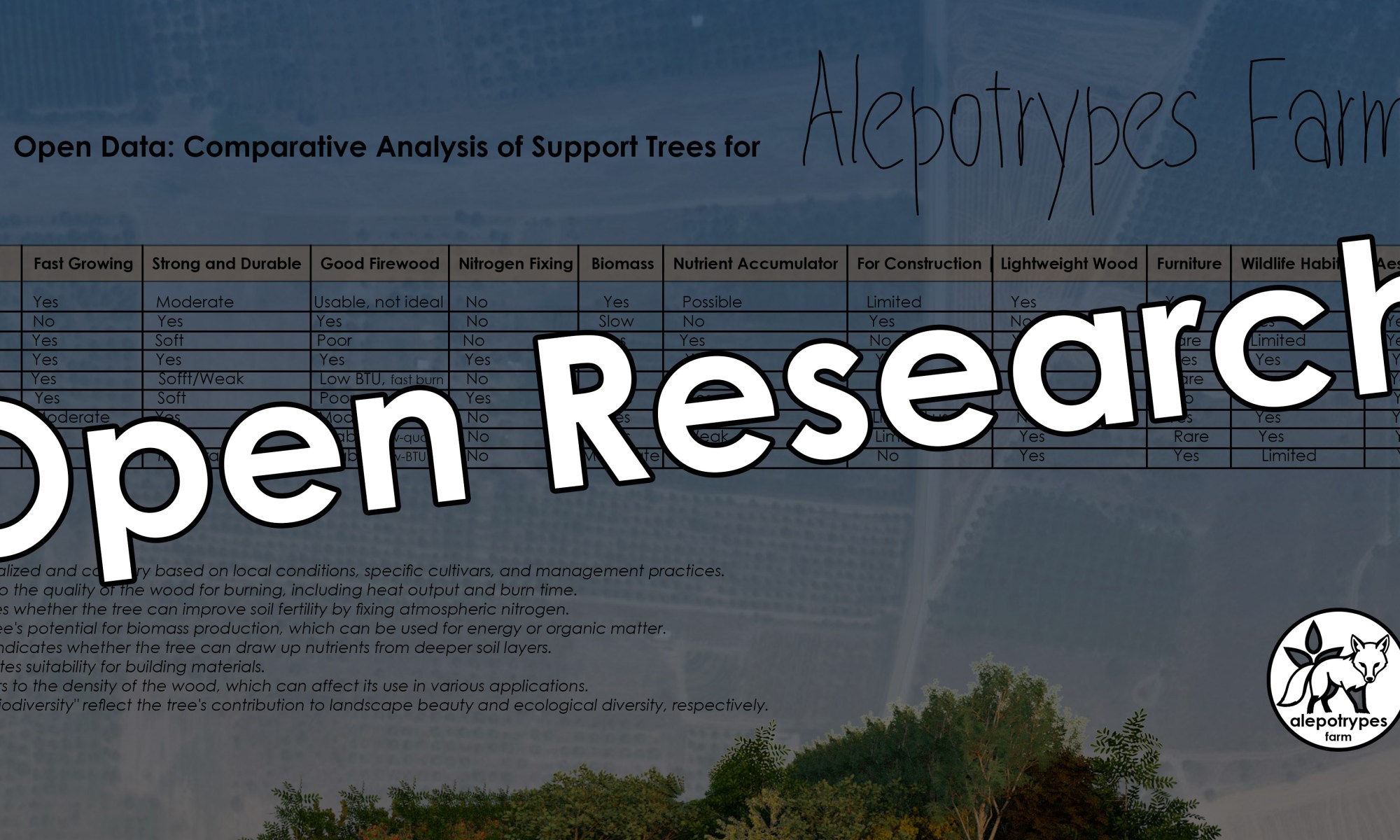
Open Data: Comparative Analysis of Support Trees

Data shown below is open and accessible.
| Tree Species | Fast Growing | Strong & Durable | Good Firewood | Nitrogen Fixing | Biomass | Nutrient Accumulator | For Construction | Lightweight Wood | Furniture | Wildlife Habitat | Aesthetic Value | Biodiversity |
|---|---|---|---|---|---|---|---|---|---|---|---|---|
| Melia azedarach | Yes | Moderate | Usable, not ideal | No | Yes | Possible | Limited | Yes | Yes | Yes | Yes | Moderate |
| Quercus pubescens | No | Yes | Yes | No | Slow | No | Yes | No | Yes | Yes | Yes, high | High |
| Paulownia tomentosa | Yes | Soft | Poor | No | Yes | Yes | No, too soft | Yes | Rare | Limited | Yes | Moderate |
| Robinia pseudoacacia | Yes | Yes | Yes | Yes | Yes | Yes | Yes | No | Yes | Yes | Yes | High |
| Acer negundo | Yes | Soft/Weak | Low BTU, fast burn | No | Yes | Minor | No | Yes | Rare | Yes | Yes | Moderate |
| Albizia julibrissin | Yes | Soft | Poor | Yes | Yes | Yes | No | Yes | No | Yes | Yes, high | High |
| Liquidambar styraciflua | Moderate | Yes | Moderate | No | Yes | Moderate | Limited use | No | Yes | Yes | Yes, high | High |
| Catalpa bignonioides | Yes | Soft | Usable, low-quality | No | Yes | Weak | Limited | Yes | Rare | Yes | Yes | Moderate |
| Ginkgo biloba | No | Moderate | Usable, low-BTU | No | Moderate | No | No | Yes | Yes | Limited | Yes, high | Moderate |
Notes:
- The attributes are generalized and can vary based on local conditions, specific cultivars, and management practices.
- “Good Firewood” refers to the quality of the wood for burning, including heat output and burn time.
- “Nitrogen Fixing” indicates whether the tree can improve soil fertility by fixing atmospheric nitrogen.
- “Biomass” refers to the tree’s potential for biomass production, which can be used for energy or organic matter.
- “Nutrient Accumulator” indicates whether the tree can draw up nutrients from deeper soil layers.
- “For Construction” indicates suitability for building materials.
- “Lightweight Wood” refers to the density of the wood, which can affect its use in various applications.
- “Aesthetic Value” and “Biodiversity” reflect the tree’s contribution to landscape beauty and ecological diversity, respectively.
Live Biodiversity Feed from the Site
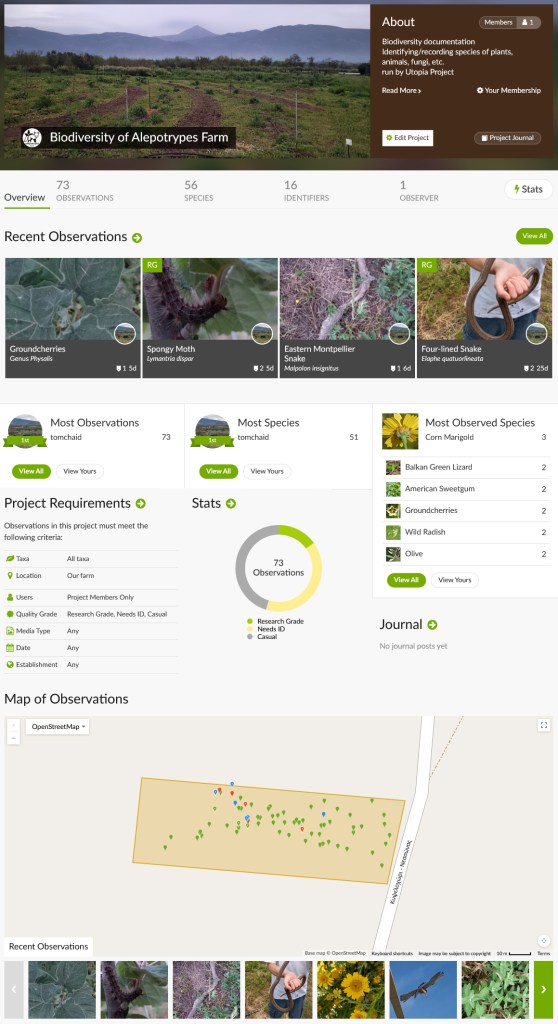
We’re documenting all species observed on our land using iNaturalist.
This helps us understand seasonal changes, track biodiversity, and share findings openly.
Below is a snapshot from our live species observations:
 Utopia project